by Emmitt Barry, Worthy News Washington D.C. Bureau Chief
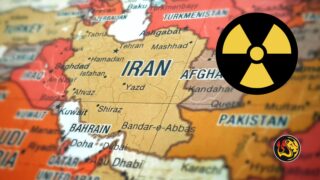
(Worthy News) – A growing chorus of Iranian hardliners is openly calling for the Islamic Republic to pursue nuclear weapons, as internal divisions intensify amid ongoing conflict with the United States and Israel—two nations the regime has long targeted with chants of “Death to America” and “Death to Israel.”
Although Tehran continues to officially deny any intention of building a nuclear bomb, new reports indicate that debate within Iran’s leadership is becoming more public—and more urgent. According to Reuters, influential voices within the regime, particularly those aligned with the Islamic Revolutionary Guard Corps (IRGC), are increasingly advocating for a shift in nuclear doctrine.
One Iranian commentator, speaking on state television, captured the rising sentiment: Iran must pursue nuclear weapons “either we build them ourselves, or we buy them.” Such statements are raising alarm internationally, especially given the regime’s longstanding hostility toward both Washington and Jerusalem.
The push comes as the IRGC gains greater influence following a leadership vacuum at the top of the regime, after a series of high-profile assassinations — including that of longtime Supreme Leader Ayatollah Ali Khamenei. Analysts suggest this shift has emboldened hardline factions that view nuclear capability not only as a deterrent, but as a strategic tool against their declared enemies.
At the same time, the Trump administration has drawn a firm and unmistakable line: Iran will not be permitted to acquire nuclear weapons as part of any peace agreement to end the war. U.S. officials have made clear that any lasting resolution to the conflict must include verifiable guarantees that Tehran abandons any pathway to a nuclear arsenal.
This position is increasingly shaping the trajectory of the conflict. As long as Iranian hardliners continue to push for nuclear weapons—and even openly discuss acquiring them—prospects for peace remain dim. Diplomatic efforts are now directly tied to Iran’s willingness to step back from nuclear ambitions, raising the likelihood that military operations will continue if Tehran refuses to comply.
Meanwhile, calls to withdraw from the Nuclear Non-Proliferation Treaty (NPT) are gaining traction. State-affiliated media outlets and prominent political figures have urged Tehran to reconsider its commitments, with some proposing immediate suspension of the treaty while maintaining a civilian nuclear program.
Iran has already accumulated a significant stockpile of uranium enriched to 60% — a level far beyond civilian needs and just short of weapons-grade. Estimates suggest this material could be further refined to produce fissile material for multiple nuclear warheads, though experts caution that additional technological hurdles remain.
Despite the escalating rhetoric, Iranian officials have not yet made a formal decision to pursue a nuclear weapon. Some within the political establishment remain wary, recognizing that such a move could trigger overwhelming military retaliation from Israel or the United States.
Meanwhile, recent joint U.S.-Israeli strikes have significantly degraded Iran’s nuclear and military infrastructure, potentially delaying any rapid breakout toward a nuclear arsenal.
What was once taboo—the open discussion of acquiring nuclear weapons—is now increasingly normalized in both public discourse and internal deliberations. But as that rhetoric intensifies, so too does the resolve in Washington and Jerusalem.
For now, the message from the Trump administration is clear: there will be no peace with a nuclear-armed Iran—and until that reality is accepted in Tehran, the conflict is unlikely to end.
IRAN’S NUCLEAR AMBITIONS CONNECTED TO PROPHECY?
While the West often views Iran’s nuclear program through a secular lens, the spiritual aspect, which plays a central role in driving Iran’s nuclear ambitions, should not be overlooked. Iran is the only country where Twelver Shi’ism is the state religion.
Twelver Shīʿism, the largest branch of Shīʿa Islam, makes up about 85% of Shīʿas. “Twelver” signifies belief in twelve divinely appointed leaders, the Twelve Imams, with the last, Imam al-Mahdi, expected to return as the Mahdi. Twelvers see the Imams as Muhammad’s spiritual and political successors, guiding with justice and interpreting the inner meanings of the Qur’an and Islamic law. They are viewed as infallible (Ismah) and divinely chosen (nass).
The Twelvers believe that the Mahdi is expected to appear in times of extreme chaos, returning alongside Jesus as a messiah to bring peace and establish Islam globally.
Twelver beliefs, Iran’s nuclear ambitions, and threats toward Israel and the West have raised concerns. Critics suggest that Iran’s Supreme Leader might incite conflict to hasten the 12th Imam’s arrival. Former Iranian President Ahmadinejad has even called for the Imam’s return at the UN, asserting that the Islamic Revolution’s primary goal is to prepare for his reappearance.
Copyright 1999-2026 Worthy News. This article was originally published on Worthy News and was reproduced with permission.